I'm kidding. I have plenty of my own. Well, at least I had plenty. That was before I got on this kick of using plarn. In case you hadn't heard, plarn is "plastic yarn," more specifically, yarn made from plain old plastic grocery bag type of bags.
I tried the plarn ideas around the internet, but they all turn out a fine plarn that's more suitable for table cloths or baby bibs, maybe. I tried knitting with it, but it's not very yielding and my old hands began to hurt after a little while.
It took awhile, but I figured out what to do. If you make the plastic bag strips much wider - about four to five inches instead of one - the plarn will be fatter. Okay, so that didn't take a lot of brains to figure out, but if you've tried using the one or two inch strips like the youtube videos show and found them hard to work with, try again with much wider strips.
It will take more bags, but isn't that the idea, anyway?
Don't stop with plastic grocery bags, though. Plastic bread bags, produce bags and any other clean plastic bag will do. Thinner plastic just needs wider strips.
Why not use plarn to knit or crochet? It's free.
Tuesday, July 23, 2013
Saturday, July 20, 2013
A is for Apple

Apples are good food, but they're the best when they're in season, which is in the very late summer and early fall. If you buy apples throughout the winter, they're still pretty good, but they've been in storage for awhile. If you buy them in the spring and summer before the new crop, you're buying from somewhere far away or you're buying old apples.
Old apples are not good apples. Much of their nutrition is lost after months of storage and they're usually soft and often have bruises.
Apples from far away are not so great, either. First, they're expensive, having been trucked or flown thousands of miles. Secondly, the "country of origin" may allow pesticides and herbicides and other poisons that are not safe. Even if you're not into organic food, eating extra poisons doesn't make sense.
Leave the apples in the store and wait for the new crops to come in this fall. They'll be cheaper, more nutritious, taste better and you'll get your money's worth.


Monday, July 15, 2013
Coupons as Part of Frugal Living
 To be honest, I don't use many coupons. It's not because I don't think they save money; they do. The reason I don't use many is because I don't buy most of the products there are coupons for.
 I went so far as to go to a coupon page - you know, the ones that list coupons for your area. You tick the ones you want then print them off. I went through five pages and found one coupon that I might use.
What don't I use? Pet food, frozen dinners, high priced toilet paper, paper napkins, paper towels, cold cereal, disposable diapers, refrigerated biscuits, air freshener, bottled tea... well, lots of things.
Most of those things have been created in the last few decades. I'm of the old school, I guess. I didn't need them 40 years ago and I don't need them now.
Now if they had coupons for flour (store brand), sugar, baking powder, loose leaf tea, vinegar and so on, I'd use them.
Sunday, July 7, 2013
Water, water, water....

The weather seems lopsided for the US this year. Parts of the nation are dealing with far too much water and parts of it are dealing with none at all. We're lucky so far in that it's been hot, but not as hot as some places, and it's been dry but not as dry as some places.
If you're in a severe drought, getting water to the lawn or flower bed may not be number one on your list of priorities. A vegetable garden might be on the list, but if it's hard to get enough water to it, you may still be able to save it.
First, mulch everywhere you can immediately after watering. Use whatever you have on hand: Newspaper, cardboard, grass clippings, weeds, sheets of plastic. That will trap and hold moisture right away, then you can concentrate on finding ways to get water to the garden without having to run the hose or sprinklers.
Using gray water is illegal in some areas, so not all of these ideas may work well for you. Whether it's illegal or not, use gray water with caution on food plants. Some is fine, like rinse water from dishes; some may not be, like bath water. Whenever you use gray water, use it immediately. It becomes "black water" quickly as pathogens multiply under ideal situations. Once it's on and in the ground, it doesn't deteriorate.
Save rinse water from your washer. There are many different set ups in laundries, so it may be difficult for you to save it, but try to figure a way to do it. Some people can pump water out onto the lawn straight from the washing machine. Mine goes into one of those huge granite sinks and I just put the plug in it when the wash water drains. (More often, I use the wringer washer and that makes it simple.)
Save rinse water from washing dishes. I don't know how hard it would be to do that with an automatic dishwasher. I wash dishes by hand. Rinse water from dishes is good for the soil.
When it rains, get a bucket or a bowl or whatever you can find and catch the water from your gutters. (In some states, catching rain water is illegal, too, so be sure to check first.)
Keep a bowl under the kitchen faucet to catch drips and drops and water run to cool off or warm up. It's not gray water, so anyone can use it.
I put a pitcher on the back of the cabinet and dump bits of leftover water and ice cubes into it. When it fills up, it waters a couple of plants.
Put a bucket under the faucet in the shower to catch water while it warms up. This isn't gray water either, but if you also put a plug in the tub and catch the shower water, it is.
As you work on it, other water saving ideas will occur. Don't ignore them, no matter how outlandish they may be.
Thursday, May 16, 2013
I'm Still Learning: Plumbing Lesson
New Plumber in the House is a post I wrote after (successfully!) fixing a toilet valve that wouldn't shut off. I'm not much of a plumber and don't intend to be at this stage of life, but I did feel good about that.
I don't know about teaching old dogs new tricks, but if you're an... um... older person like me, you can learn new things, too. As a matter of fact, the more new things we learn, the younger our brain stays, they say.
I guess I wouldn't want too young of a brain, butI doubt there's much danger in that.
I don't know about teaching old dogs new tricks, but if you're an... um... older person like me, you can learn new things, too. As a matter of fact, the more new things we learn, the younger our brain stays, they say.
I guess I wouldn't want too young of a brain, butI doubt there's much danger in that.
Friday, March 29, 2013
Natural resource: cardboard boxes
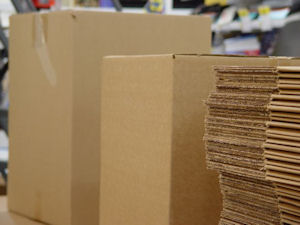
What do we do with them? Many of them are thrown away with no other use at all. What CAN we do with them? A lot. Here are a few ideas:
As a receptacle for branches, grass, weeds and other spring clean up trash. Cardboard boxes don't develop holes or stretch too far like plastic bags do and they're biodegradable and they're free if you save them from other things.
Use cardboard boxes as containers, of course, because that's what they are. Store things in them for the garage or closet, but if you need a container that needs to look good, too, a cardboard box can be painted or covered with cloth or paper (check your Christmas paper stash). From Christmas ornaments to yarn storage, cardboard boxes are perfect.
Table, anyone? If you need a side table, find a cardboard box the right size, turn it up and put a cloth over it to cover. Or paint it and put a scarf or other cloth over the top to camouflage it. Or make a play table or dining table for tots by turning a large cardboard box upside down and cutting the sides out about half way up. (Great for those family get togethers!)
You probably already use at least some of these:
- Shoe boxes to hold tax receipts or other papers
- Odd shaped boxes to hold gifts
- Small boxes as drawer organizers
- Small to medium boxes as desk top organizers
- Toy boxes for small pieces or collections
- Clothes basket (line with plastic bag)
Friday, March 15, 2013
Water Savings
With the drought continuing in many places, using fresh, treated water from the tap for everything is beginning to seem very wasteful. If you want to save water and save money, too, there are a lot of ways to do it.
For instance, at any given time you walk into my kitchen, there will be a glass or glasses set back on the counter with varying levels of water in them. I fill each one as water becomes available from leftover drinking water and melted ice from drinks. It's then used to water the house plants or to dump on the floor for a quick mop up.
There is at times a bucket just outside the back door that holds rinse water from doing dishes or water that's run to heat up or cool down, or water that I've rinsed my hands in. I use it to water outside plants or sometimes to mop the floor. I've washed the car with it and even washed windows with it. It's plenty clean enough for things like that.
Water that has been used to rinse dishes with is sometimes recycled in the bathroom to wash the sink or toilet - and again, the floor.
There's always the shower water which can be used to flush the toilet, pour out on plants or lawn, scrub the floor or wash the car.
When I'm cooking, I leave a pan of water in the kitchen sink to rinse my hands between tasks. When I stopped to pay attention, I was amazed at how many times I turned on the water for that.
Leftover tea or coffee waters plants, too. Put the sugared drinks on outdoors plants to avoid attracting insects into the house.
Go to Extremely Frugal and search for water. There are many, many ways to reduce the amount of water we use.
For instance, at any given time you walk into my kitchen, there will be a glass or glasses set back on the counter with varying levels of water in them. I fill each one as water becomes available from leftover drinking water and melted ice from drinks. It's then used to water the house plants or to dump on the floor for a quick mop up.
There is at times a bucket just outside the back door that holds rinse water from doing dishes or water that's run to heat up or cool down, or water that I've rinsed my hands in. I use it to water outside plants or sometimes to mop the floor. I've washed the car with it and even washed windows with it. It's plenty clean enough for things like that.
Water that has been used to rinse dishes with is sometimes recycled in the bathroom to wash the sink or toilet - and again, the floor.
There's always the shower water which can be used to flush the toilet, pour out on plants or lawn, scrub the floor or wash the car.
When I'm cooking, I leave a pan of water in the kitchen sink to rinse my hands between tasks. When I stopped to pay attention, I was amazed at how many times I turned on the water for that.
Leftover tea or coffee waters plants, too. Put the sugared drinks on outdoors plants to avoid attracting insects into the house.
Go to Extremely Frugal and search for water. There are many, many ways to reduce the amount of water we use.
Thursday, March 7, 2013
Here Comes Peter Cottontail! It's Nearly Easter

Hopping down the bunny trail...
Hippety, hoppety, Easter's on its way!
And so it is. Easter is early this year, so if you'd like to do something a little different, it's time to get started. I'm making Easter baskets and remembering those nights before Easter when the kids were little when we used to color eggs. What a mess it made! It was fun, though. I didn't realize at the time how much more fun dying eggs with natural foods could be. If you want to try dying Easter eggs without having to buy the dye, here is what I finally figured out. First, you have to start now to save the various foodstuffs in time.
-
Get your Easter eggs ready to dye by washing in mild soap and warm water to remove any 'sealer' or residue.
Longer boiling or soaking will make the color deeper. - Eggs keep better the longer they're boiled, anyway, and a half hour won't hurt them, texture or taste wise.
- Use a teaspoon of vinegar to help set the dye in these. Add it at the same time you add the egg.
- Make designs on eggs with plain crayons before coloring. You don't need a special clear wax crayon to decorate Easter eggs.
- Light green - Save the water from canned or fresh cooked spinach and boil eggs in it, or pick a few dandelion leaves to boil them in.
- Pale Yellow - Add carrot tops, celery seed or orange peel to water for boiling eggs.
- Deep Yellow - Put ground turmeric in the water with boiling eggs, or use yellow onion skins to dye them a deep yellow.
- Orange - Yellow onion skins, at least two cups full. Boil them for a half hour, then add eggs and boil until the eggs are done. If you don't have many, boil what you have in a small pan, with just enough water to cover an egg.
- Tan - Coffee or tea.
- Blue - Red cabbage leaves will dye eggs blue. Boil leaves in water, then use the cool liquid to dye boiled eggs. Or let the eggs set in juice drained from canned blueberries.
- Pink - Use the liquid from canned or pickled beets, or boil along with a fresh beet, or chopped rhubarb stalks, red onion skins. Beets make an especially pretty Easter color.
- Lavendar - Purple grape juice makes a good dye for a pretty Easter color.
- Red - Red onion skins. This takes at least three cups full to a quart of water and you have to soak the eggs in it for a half hour or so after boiling. Red is a hard color to create with natural dyes.
- Bright Yellow - Inner bark of apple tree bark. Scrape the bark into a pot of water and boil for a half hour or so. Don't use vinegar in this, but add a half teaspoon of alum to each quart when cool, to bring out the color.
Experiment and have fun. As long as it's a food or food safe product, you don't have to worry about it hurting the Easter egg or the eater thereof!
Thursday, February 21, 2013
Teach Others to Yearn For What You Have
 "If
you want to build a ship, don't drum up the men to gather wood, divide
the work, and give orders. Instead, teach them to yearn for the vast and
endless sea."
"If
you want to build a ship, don't drum up the men to gather wood, divide
the work, and give orders. Instead, teach them to yearn for the vast and
endless sea."- Antoine St Exupery
There is wisdom in this quote. We can put it to good frugal use if we think just a little bit. Is there someone you know who could benefit from learning to save money or controlling expenses? Don't try to teach them how to do it. Instead, teach them to want to be debt free or to be able to live in comfort and even with some excitement while staying within their income.
In other words, don't talk so much about what it takes to do it. Talk about what it's like after you've done it. Did you wait a year while saving money to take the vacation of a lifetime? Don't harp on that. Instead, tell them how nice it was to not have to worry about paying it all off when you got home. Talk about how relaxed you were for weeks afterward. Spark in them the desire to do the same; make them envious of your lifestyle.
And if they call it good fortune or good luck, then you can tell them how you make your own good luck!
Tuesday, February 5, 2013
Heaters for the Frugal
Probably the cheapest way to stay warm when it's cold is with a wood stove... IF you can get out and get your own wood. Buying it may be cheaper than buying gas or oil, but again, it may not.
You can get wood for free or cheap but you have to work at it. Some places (newspapers, notably) get deliveries on wood pallets which they sometimes give away. It's cheaper to do that than to ship them back where they came from and they're there for the asking.
Besides that, keep an eye on your local Freecycle or Craigslist for trees that need to be removed or other free firewood for the picking/cleaning up. You might even have some in your own backyard.
Besides wood stoves? Kerosene can be inexpensive if you live in a small house, but there are dangers to using kerosene heaters indoors. Look for one that's made specifically for indoor heating and don't use lamp oil in it. Go to a gas station or farm supply store and ask for plain old fashioned kerosene. It will smell, yes. If you can't stand the smell, you can get kerosene that's been deodorized, but it will cost more.
Electric heaters can inexpensively heat a small space like one room of your house while you turn down the heat in the rest of it. Figure the cost by finding the cost per kilowatt hour on your electric bill, then multiplying times 1 1/2, which is 1500 watts, the maximum allowed by law. Multiply that by how many hours you use the heater to get the cost.
How else can you stay warm? Warm yourself and not the house.
Or go for some extremely frugal warming up tips.
Or see how I stayed warm when the power went out!
Don't let conventionality make you pay more in heating bills than you need to. If your bills are too high, look around, make some adjustments and do what you can to stay warm and keep as much of your money as you can.
You can get wood for free or cheap but you have to work at it. Some places (newspapers, notably) get deliveries on wood pallets which they sometimes give away. It's cheaper to do that than to ship them back where they came from and they're there for the asking.
Besides that, keep an eye on your local Freecycle or Craigslist for trees that need to be removed or other free firewood for the picking/cleaning up. You might even have some in your own backyard.
Besides wood stoves? Kerosene can be inexpensive if you live in a small house, but there are dangers to using kerosene heaters indoors. Look for one that's made specifically for indoor heating and don't use lamp oil in it. Go to a gas station or farm supply store and ask for plain old fashioned kerosene. It will smell, yes. If you can't stand the smell, you can get kerosene that's been deodorized, but it will cost more.
Electric heaters can inexpensively heat a small space like one room of your house while you turn down the heat in the rest of it. Figure the cost by finding the cost per kilowatt hour on your electric bill, then multiplying times 1 1/2, which is 1500 watts, the maximum allowed by law. Multiply that by how many hours you use the heater to get the cost.
How else can you stay warm? Warm yourself and not the house.
Or go for some extremely frugal warming up tips.
Or see how I stayed warm when the power went out!
Don't let conventionality make you pay more in heating bills than you need to. If your bills are too high, look around, make some adjustments and do what you can to stay warm and keep as much of your money as you can.
Subscribe to:
Posts (Atom)